Ledges in Endodontics: Etiopathogenesis, Diagnosis, and Management
Informations
Dear Colleagues, in our fifth webinar for 2026 and fifth episode of the “Clinical Endodontics - Master Series” scheduled for Tuesday, September 8, 2026 at 20:00, Antonis Chaniotis, Endodontist, will be covering the topic: “Ledges in Endodontics: Etiopathogenesis, Diagnosis, and Management”. This webinar is a collaboration of the Hellenic Association of Endodontists and the Dental Association of Pireus. Attendees will be credited 1,5 CE credits (MEEO). The language of the webinar will be Greek.

Abstract
Introduction: Ledge formation is one of the most common complications encountered during the mechanical preparation of root canals.
Aim and Materials: The aim of this presentation is to describe the etiopathogenesis, diagnostic methods, and management strategies of ledges in endodontics. For this purpose, an extensive literature search was conducted in the electronic databases PubMed and Google Scholar using the following keywords: ledge formation etiology, complications in endodontics, and ledge formation bypass.
Results: A ledge is defined as any iatrogenic alteration of the natural anatomy of the root canal. Some of the factors leading to ledge formation include the use of rigid instruments in curved root canals, inadequate access cavity preparation, incorrect determination of working length, and the creation of space for a post. Recognition of ledges is relatively straightforward for the clinician, as the characteristic sensation of “tug-back” during the use of small instruments is lost and access to the natural anatomical pathway of the canal becomes impossible. The primary goal in managing ledges is to regain the original canal pathway using pre-curved files and copious irrigation; when this is not feasible, surgical management is indicated. Management techniques will be demonstrated through clinical cases.
Conclusions: Ledge formation is a frequent complication in daily clinical practice. Early diagnosis and appropriate treatment are critical factors in determining the prognosis of the affected teeth.
Short CV
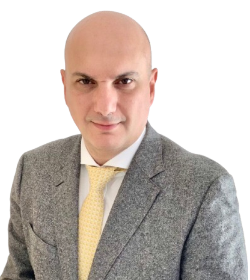
Dr. Antonis Chaniotis, DDS, MDSC
Chaniotis Antonis graduated from the University of Athens Dental School, Greece (1998). In 2003 he completed the three-year postgraduate program in Endodontics at the University of Athens Dental School.
Since 2003, he owns a limited to microscopic Endodontics private practice in Athens, Greece.
For the last ten years, he served as a clinical instructor affiliated with the undergraduate and postgraduate programs at the University of Athens, Athens Dental School, Endodontic Department, Greece.
In 2012 he was awarded the title of Clinical fellow teacher at the University of Warwick, Warwick dentistry UK.
He lectures nationally and internationally, and he has published articles in local and international Journals.
Ιn 2015 he introduced a novel technique for the management of highly curved root canals and in 2022 he was invited to publish a narrative review in International Endodontic Journal about the management of curved and calcified canals. This review is among the 5 most downloaded papers of the International Endodontic Journal.
He currently serves as a member of the Hellenic Association of Endodontists (ESE member society), as a country representative of the Hellenic Association of Endodontists in ESE, as a certified member of the European Society of Endodontology (ESE) and as an international member of American Association of Endodontists (AAE).
In 2023 he was elected as the certified members representative in the European Society of Endodontology.
Recently he was appointed as the Chair of Clinical Committee of the European Society of Endodontology.